

Sixteen Years of Lies in a Lifejacket
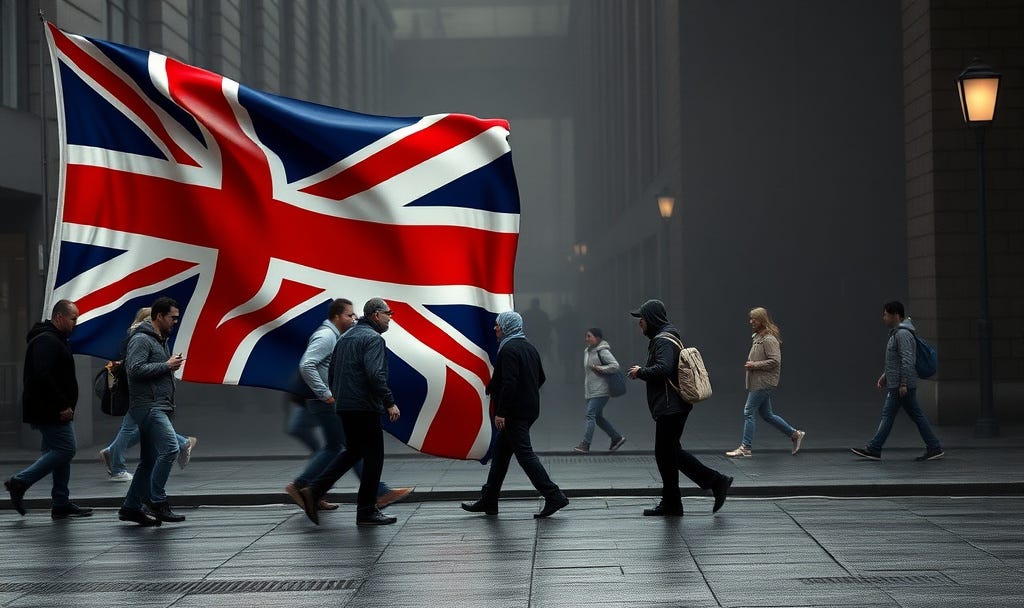
For the best part of sixteen years, the British people have been treated to the same tired little pantomime on immigration, performed by different men in different ties, under different slogans, with different logos behind the podium, but always with the same ending: nothing changes except the wording on the lectern. First it was net migration in the tens of thousands. Then it was the hostile environment. Then take back control. Then stop the boats. Then return the boats. Then smash the gangs. And somewhere in the middle of all that came the Boris-era explosion in numbers which people now rightly describe as the Boriswave, which sounds less like a border policy and more like a particularly nasty bout of food poisoning. Every few years a Prime Minister or Home Secretary steps forward with the expression of a man about to save civilisation, only to produce another slogan so hollow it could be used as a canoe. The public is told, yet again, that this time they mean it. This time they are serious. This time the system will be tougher, firmer, faster, harder, more robust, more controlled, more strategic, more streamlined, more whatever focus-grouped drivel some expensively moisturised adviser came up with over a quinoa lunch in Westminster. And then, of course, absolutely sod all happens.
That is the genius of the British political class. They no longer govern problems. They narrate them. They do not solve immigration. They stage-manage it. They do not defend borders. They workshop phrases. Britain, in this respect, has become a country run by marketing executives with ministerial cars. The politicians speak in action-movie taglines, as though the nation is meant to swoon because some over-promoted careerist in a suit has announced he will “smash the gangs”. Smash them with what, exactly? A laminated briefing note? A strongly worded hashtag? A round of stern interviews on the BBC sofa? We have heard this nonsense for so long now that it has become part of the national wallpaper. Children probably assume “stopping the boats” is an annual bank holiday, like Bonfire Night, only with fewer results and more procurement contracts.
And that is what really insults the public. Not merely the scale of the failure, but the sheer contempt built into the performance. Because this only works if the British people are assumed to be idiots. It only works if Westminster believes voters have the memory of a concussed goldfish and the standards of a hostage. Every election cycle the script is dusted off, the same words are polished, the same concern is theatrically expressed, the same numbers are declared unsustainable, the same moral urgency is summoned, and then, once the cameras are gone, the machine lumbers on exactly as before. Ministers come and go. Manifestos are printed and pulped. Press conferences are held. France is paid. New legislation is announced. Emergency summits are convened. Cobra probably gets a biscuit. And still the problem remains, because in modern Britain failure is not a disqualification. It is a business model.
The most extraordinary part is that the slogans have actually become more aggressive as the state has become more useless. When government is weak, the language gets tough. When ministers are out of ideas, they start sounding like background characters in a second-rate gangster film. “Smash the gangs.” “Stop the boats.” “Take back control.” It is all wonderfully masculine and decisive on paper, right up until reality arrives and reveals that the same state which can monitor your recycling habits, lecture you on pronouns, and fine you for sneezing in the wrong emissions zone somehow cannot control who enters the country. Apparently the British state is an iron tyrant when dealing with law-abiding taxpayers, but a dithering jellyfish when confronted by organised illegality, people-smuggling networks, activist lawyers, and the international grievance industry. It can find time to police Facebook posts, but not a coastline. Marvellous.
And so the public is left with the same nauseating cycle: promise, slogan, failure, rebrand, repeat. It has been going on so long now that one suspects immigration policy is less a matter of national interest than a kind of ceremonial chant performed to reassure the peasants. The purpose is not to achieve anything. The purpose is to create the impression that something is being attempted, somewhere, by someone, in a meeting, probably. It is bureaucratic theatre for a country that used to build an empire and now cannot even produce a functioning consensus on whether its own borders ought to mean anything. We are governed by people who speak of sovereignty as though it is an optional mood board. They love the language of nationhood at conference season and abandon it the moment it becomes inconvenient to a court, a treaty, a department, a quango, or a panel of graduate activists from North London who think patriotism is basically fascism with bunting.
Sixteen years. Sixteen years of pledges, resets, crackdowns, plans, schemes, targets, deterrents, taskforces, agreements, and sternly delivered rubbish. Sixteen years of being told the issue is finally under control while it visibly is not. Sixteen years in which the only thing that has been effectively controlled is the language used to disguise failure. And that, in the end, is the real scandal. Britain has not been governed on immigration. It has been conned on immigration. Lied to. Managed. Pacified. Fed catchphrases in place of action and excuses in place of statecraft. The boats, the gangs, the numbers, the promises, the outrage, the headlines — all of it has become one long national exercise in political fraud. Because if, after all this time, the slogans keep changing but the result never does, then the conclusion is painfully obvious. They were never trying to fix it. They were trying to survive it. And there is a world of difference between a government that cannot solve a problem and a political class that has learned to live off pretending it will.
I still keep on wondering why was it that Blair and those who came after him decided to open up our borders to mass migration. I believe there was some Cabinet opposition to Blair over its impact but he ploughed on ahead. And now we are left to pick up the pieces - everyday you read reports of how Britain no longer resembles the country it was, how local communities have been flooded with third worlders, how London and other major cities now have non-whites in the majoirty.
This was a deliberate exercise by the ruling elite to change the demographics of what was a once great nation. Was this all because they pandered to the multinationals to import cheap unskilled labour that would undercut the British worker, or was it a deliberate plan to impose some sort of multicultural agenda, importing people more likely to vote for the Left than Right? I still have not found satisfactory answers to what was the main reasoning that has literally turned parts of our nation into third world slums, and now with parts of the populace that simply inhabit a country's land but have no interest in its culture, traditions and history - in fact many actually express resentment towards them.
Excellent article. Sums the issue up completely. It doesn’t impact politicians lives at all. So fed up with this & no one in Government is listening.